
Building a family tree is an exciting journey that connects generations through stories, records, and meaningful relationships. While names, birth dates, and places are the foundation of genealogy, understanding how people were connected is equally important. Every relationship tells a story, and recording it correctly helps preserve your family's history with greater accuracy.
Many genealogists focus on collecting historical documents but forget to update relationship details. Over time, families experience marriages, remarriages, divorces, separations, and other life changes. If these events are not recorded properly, your family tree can become confusing and incomplete. Keeping relationship information current ensures that your genealogy reflects real life rather than assumptions.
Accurate relationship records also make it easier for relatives to understand family connections. Future generations can explore their ancestry with confidence, knowing that every relationship has been documented carefully. This creates a family tree that is both informative and meaningful.
Why Relationship Status Should Never Be Ignored
Every family has a unique history. Some couples spend a lifetime together, while others experience changes that shape the family's story in different ways. Recording these details provides valuable historical context and makes your genealogy more reliable.
When relationship information is incomplete, researchers may misunderstand family connections or duplicate records. Taking a few moments to record the correct status today can save hours of research in the future. It also improves the quality of reports, charts, and family books created from your genealogy software.
Choose a Status for a Couples Relationship
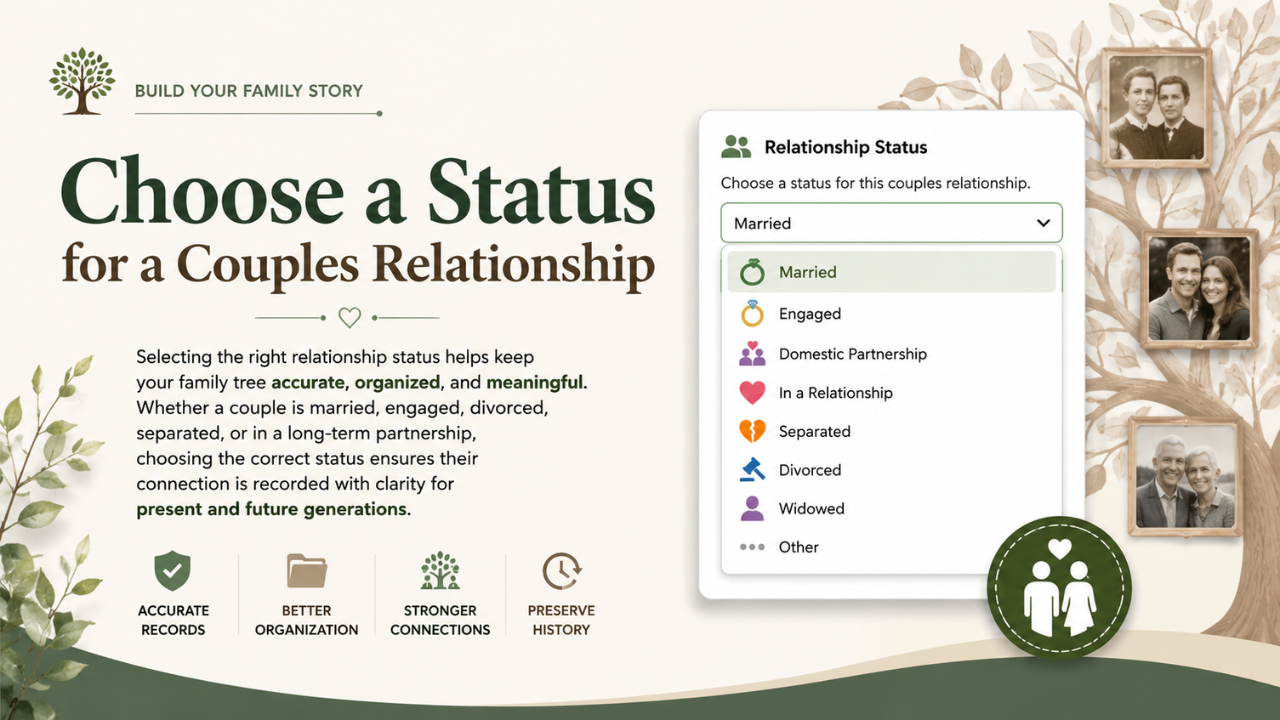
As you continue building your genealogy records, remember to Choose a status for a couples relationship that accurately represents their life together. Whether they were married, engaged, divorced, separated, widowed, or lifelong partners, selecting the appropriate status helps organize your family tree and creates a more accurate historical record.
This simple step improves the clarity of your research and ensures that every relationship is represented honestly. It also helps other family members understand how individuals were connected throughout different stages of their lives.
Tips for Recording Relationship Details
Whenever possible, support your information with reliable historical records. Marriage certificates, divorce documents, census records, church registers, newspaper announcements, family letters, and interviews with relatives are all excellent sources of evidence.
If you cannot verify a relationship immediately, avoid making assumptions. Add notes to your research and continue searching for reliable documents. Genealogy is an ongoing process, and updating information as new records become available is a sign of careful research.
Review your family tree regularly to identify missing or outdated relationship details. Even small updates can improve the overall accuracy of your genealogy database.
Build a Family Tree Future Generations Will Trust
A well-documented family tree is more than a record of names—it is a lasting legacy. Every accurate relationship adds depth, meaning, and authenticity to your family's story. By carefully recording relationship status and keeping your genealogy organized, you create a valuable resource that future generations can explore with pride.
The effort you invest today will help preserve your family's history for years to come. Every correctly documented relationship strengthens your family tree and ensures that the stories of your ancestors continue to inspire those who follow.